Classic ToP strategic processes combined with tools and techniques that responded to the group dynamics resulted in a full and constructive day of shared perspectives, creativity, consideration and clarification of where to go and how to get there.
In light of changes in organisational structure, the client saw a need for a meeting to identify the directions and priorities to take into the future, with consideration of the past, at this nexus of change.
The initial scoping was carried out by a colleague who then realised a diary clash. Equipped with her original framework, I was able to meet with the client and gather further insights into the group needs and dynamics. A plan rich in ToP processes and techniques responded to specific needs of the group (including 2 participants online) and only one day together!
Connection of people at the start focused on sharing what resonated strongly from the existing vision before creating a collection of phrases that “boldly stated the way the park and experience will stand out in the future”.
This set the group up for “looking back to move forward”, using an Historical Scan to create a timeline of events associated with the place. Small groups worked on 3 subcategories before coming together to add their notes and discuss these with the full group. This activity generated a lot of information, questions, discussion and laughter.
Next, the group was asked: “Bearing in mind our aspirations and the history of this place, what do we need to be mindful of as we move into the future?” This surfaced a list of considerations and realities.
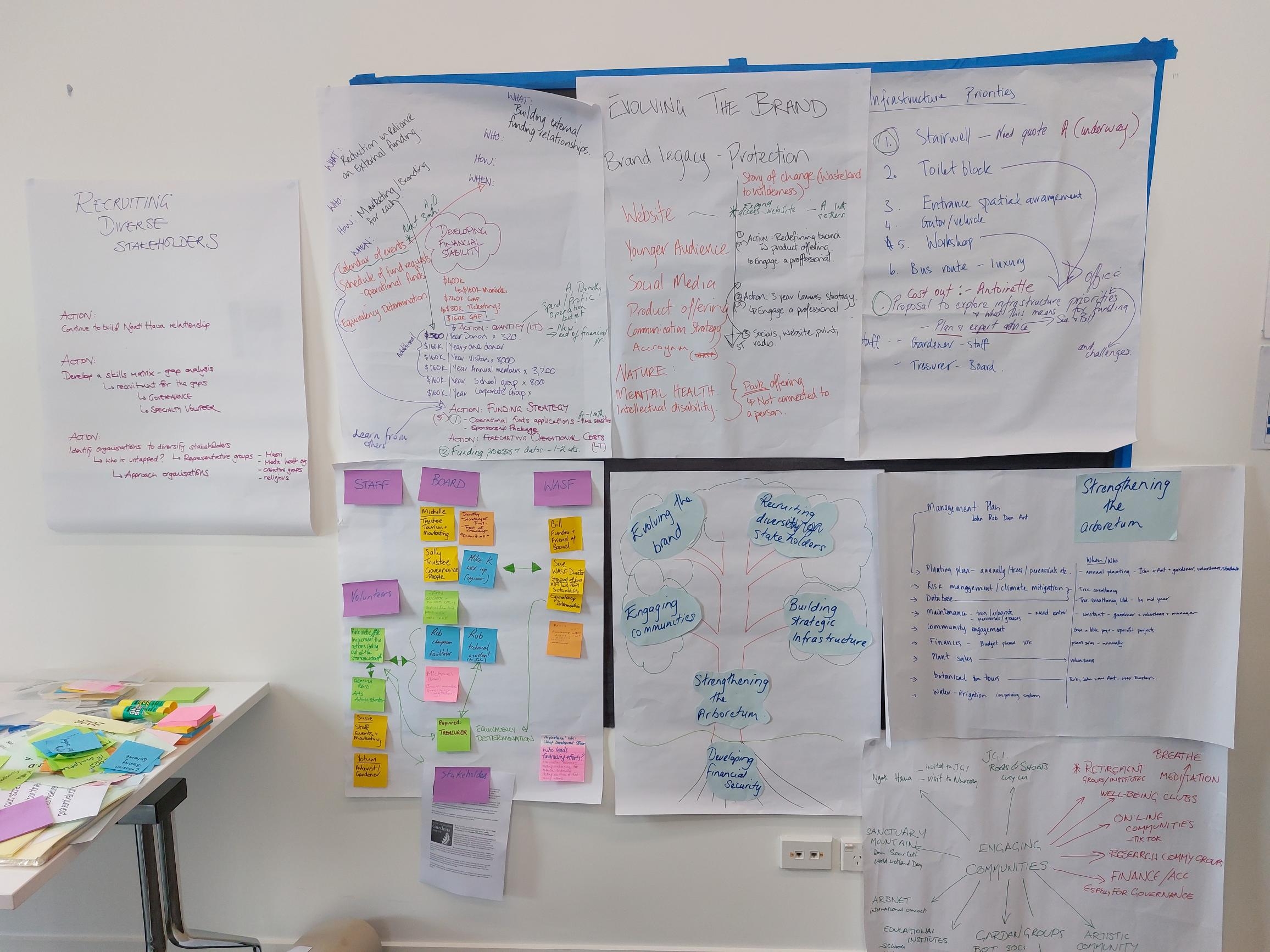
Recharged from a break, the group were guided through a classic Strategic Directions workshop, generating ideas and working towards consensus. This was an important step in insuring that the energies and finances of the group are focused on aspects collectively agreed upon, grounded in reality to moving forward cohesively. After rigorous discussion and consolidation 6 directions emerged.
Smaller groups then took responsibility for working on implementation plans for each Strategic Direction. These were drafted up then brought to the whole group for review before developing detail and timeframes. These were only draft and would be built upon at the next meeting.
The last task the group undertook was to collectively draw and discuss the organisation’s structure: roles and responsibilities and reporting lines. This was to clarify and confirm the new lines of communication, types and regularity of reporting.
This day required sharing perspectives, creativity, consideration and clarification of where to go and how to get there. It involved ambiguity, chaos, imaginative and collective thinking, then real commitment from all participants.
Contributor: Robyn Irving