A lessons-learned workshop for a geographically dispersed political electorate offered a useful test case in designing for inclusion, energy management, and shared purpose.
When a political party sought to capture lessons from their most recent election campaign, the brief appeared straightforward: gather reflections, identify improvements, inform future strategy. What emerged, however, was a more fundamental challenge. Before lessons could be gathered, the group needed a common frame of reference of what success looked like.
To address both participants worked through a Consensus Workshop with the focus question: “What are the elements of an effective campaign for our electorate?”, then a Focused Conversation using those agreed elements as a lens for reviewing the previous campaign. Twenty participants were planned for; eleven attended — a common reality in volunteer-driven organisations, and something the design accommodated.
The broader context of the day added a layer of significance. While the group gathered to consider how to run better campaigns, Reclaim Australia rallies — organised by the far right — were taking place simultaneously across the country. The contrast was not lost on those in the room.
The workshop opened with a Welcome to Country from a local Indigenous Elder. That act of acknowledgement, set against what was unfolding outside, gave the gathering meaningful weight. This was not just a planning workshop; it was an expression of values the organisation stood for.
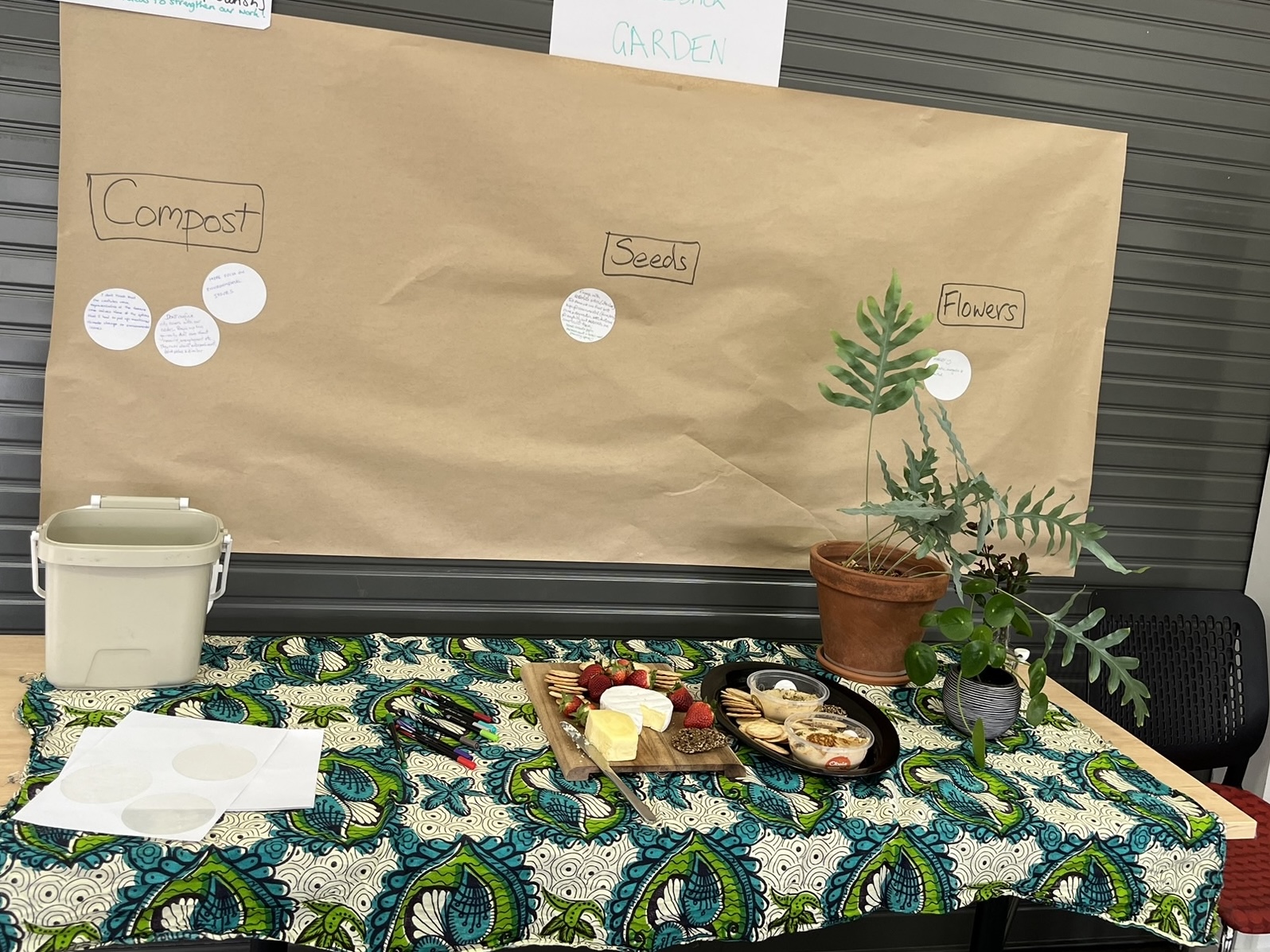
That spirit carried through into the design. A Garden Feedback Wall served as a visual metaphor for participants to capture their reflections — a tactile, imaginative tool that invited contributions in a way that a standard feedback form wouldn’t.
A playlist of songs chosen for their connection to the organisation’s values, placards from the election and the organisation's values placed around the room, reinforced a sense of shared identity and purpose.
The emotional arc of the session followed a recognisable pattern: initial apprehension, warmth through the shared meal, then genuine energy and, at points, conflict. The group moved through forming, norming, storming, and performing across the afternoon. Co-creating the agenda with committee members ahead of time, providing tactile materials, and building in a pathway for early leavers to Continue contributing all helped maintain engagement and ownership.
Timing slipped due to a late start and a last-minute addition to the agenda. By mid-afternoon, fatigue made it harder to draw out quieter voices and maintain time discipline —areas where facilitation attention matters. The lesson drawn: write activity instructions down, particularly for later in the day; and protect the facilitation design, even when additions feel difficult to push back on.
Participants left with a shared understanding of an effective campaign, valuable reflections on the previous one, and motivation to act. Two months later, the group held an action planning workshop —something the initial session made possible.
Facilitation lessons:
- People prefer quality over speed and will commit time for good outcomes.
- Write activity instructions down — especially for later in the day.
- Protect my facilitation capacity and suggest needed changes even when awkward.
Contributor: Sherona Parkinson